What are factory safety measures? Basic points you need to know
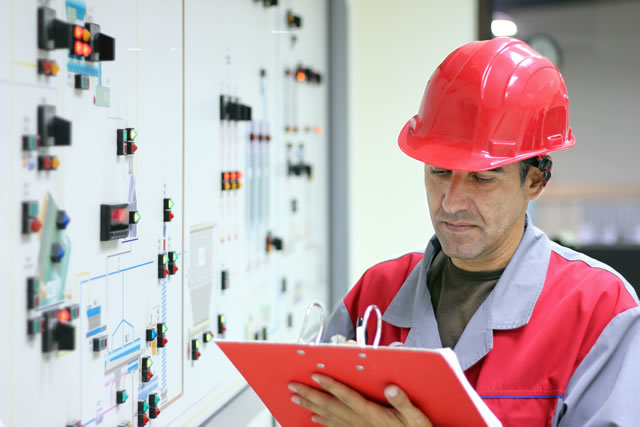
Inside the factory, various machines are in operation, and there are countless things, including Weight objects and Chemicals, that, if even slightly mishandled, could cause a serious accident.
safety measures are essential in such a factory environment; neglecting them can lead to serious accidents, and in the worst-case scenario, even endanger lives.
Therefore, in this article, we will introduce the basics of safety measures in factories.
Table of Contents [display]
1. Factory rules exist to reduce hazards.
Factories typically have rules in place to ensure safety. While these rules may increase the number of steps in the process and raise questions about work efficiency, they are essential and created to avoid danger.
Major accidents can endanger the lives of workers and even the survival of the factory. It is essential to thoroughly understand the potential hazards and ensure that all workers strictly adhere to safety rules.
If any danger arises, it is important for workers to communicate with each other (report, contact, and consult), develop countermeasures, and share a sense of urgency.
While this data isn't exclusive to factories, according to the Ministry of Health, Labour and Welfare, the number of injuries and deaths due to industrial accidents is on a downward trend, indicating an improvement in environment safety. However, even in 2016, 928 people still died.
2. environment protects workers – 5S activities
5S is a concept and slogan used in manufacturing industries such as factories to improve the workplace environment and safety. It consists of the following five elements:
・Seiri
・Seiton
• Cleaning
• Cleanliness
• Discipline (Shitsuke)
・Organization
Clearly distinguish between what you need and what you don't, and get rid of the unnecessary items.
Factories handle large quantities of various substances. Leaving unused items lying around can worsen hygiene and the working environment. Furthermore, in the event of an accident, leftover items can exacerbate the damage.
・Organization
To ensure that anyone can quickly access what they need, decide on a specific place to put tools and materials and organize them accordingly, determining the number of items and quantities available.
This not only improves work efficiency but also helps prevent accidental contamination by enabling the early detection of lost items and enhances safety when handling dangerous tools.
·cleaning
Cleaning is not just about removing trash and dust.
In addition to regular maintenance to ensure the smooth operation of machinery, depending on environment and the materials being handled, it may also be necessary to take care to eliminate bacteria and microorganisms and prevent insect infestations.
・Cleanliness
This refers to maintaining the three S's: sorting, setting in order, and cleaning, which we have explained so far.
To maintain cleanliness, it is necessary to create environment and establish rules that allow all workers to easily adhere to organization, tidiness, and cleanliness.
・ Discipline
"Discipline" involves establishing rules for maintaining cleanliness and instilling the habit of following those rules.
"Discipline" here doesn't mean scolding and forcing someone to act, but rather training to instill good habits. By ensuring all employees thoroughly follow 5S principles and rules, environment is created where accidents are less likely to occur.
3. Hazards can be predicted through training – KYT (Hazard Prediction Training)
"KYT" is an acronym for Kiken Yochi Training, and refers to training conducted to improve sensitivity to danger, concentration, and problem-solving capacity.
KYT (Kiken Yochi Training) includes a training method called the "Basic 4-Round Method," which involves two patterns: one where trainees look at illustrations of situations where accidents are likely to occur, and another where they observe actual accident sites.
The procedure is as follows:
Round 1: Uncovering hidden dangers
2R (Round): Classify by importance
3R (Round): Discuss countermeasures for the most severe issues.
4R (Round): A common rule applies to all teams.
Round 1: Uncover the hidden dangers
We'll have a group of around five people (enough to allow for active discussion) look at the illustrations and the actual site, and list all the potential dangers. The key is to identify as many problems as possible without dismissing any opinions.
The listed dangers should be written on a whiteboard or similar surface to create a list.
2R: Classify importance
From the potential dangers identified in Round 1, mark the items you consider important with a circle (◯). From those circled, narrow down the most important ones and mark them with a double circle (◎) to designate them as "danger points."
For example, each person could write down the items they consider important on a memo, and mark items that two or more people consider important with a circle (○), items that three or more people consider important with a double circle (◎), and so on.
The items are categorized into three levels of importance: no circle, circle, and double circle. Everyone points to the "danger points" marked with a double circle, which are considered particularly important, and chants them aloud.
3R: Discuss solutions for high-priority items.
Let's discuss countermeasures to address the "risk points" raised in Round 2. We'll also list the proposed solutions.
4R: A common rule for all teams.
From the countermeasures listed in 3R, we will decide which items to implement, mark them, and make them the "team's common rules."
It's effective to post the common rules on a bulletin board or similar location. Finally, let's confirm the "danger points" and "team action goals" by pointing and chanting them together.
4. Recording and reporting prevent future accidents – Horenso (reporting, spinach, and consultation) and near misses.
"Hourensou" is an abbreviation for "report, contact, and consult," and "hiyarihatto" refers to an experience in a factory or other workplace where an accident did not occur, but the person felt a "close call" or a "shock."
Herbert William Heinrich of the United States investigated thousands of industrial accidents and published the principle in his 1931 book, *Industrial Accident Prevention - A Scientific Approach*, that "for every major accident, there are 29 minor accidents and 300 near misses."
This principle is also known as "Heinrich's Law" or the "1:29:300 Rule," and is still well-known today as a way to prevent workplace accidents.
Based on this principle, to prevent accidents, we must also prevent minor accidents and near misses as much as possible. It's a good idea to keep a notebook or journal to record near misses.
If you experience a near miss, be sure to record it and report it at a company-wide meeting.
If improvements are needed, consult with your supervisor and consider specific countermeasures. Recording near-miss incidents and sharing them with everyone will help prevent serious accidents.
5.まとめ
Although the number of industrial accidents is decreasing year by year, 928 people still died in 2016. In factories that handle various hazardous materials, a single accident can be life-threatening, so strict adherence to rules is essential to ensure safety.
As a concrete safety measure, let's ensure everyone thoroughly implements the 5S principles (Sort, Set in order, Shine, Standardize, Sustain). In addition, it is important to raise awareness and create environment conducive to safety measures, such as implementing the 4R method of KYT (Hazard Prediction Training) and recording near misses.
You can never "overdo" safety measures. Let's implement them every day to create a factory where all workers can work with peace of mind.